

Talking about suicide could change a life
Talking about suicide could change a life
Concerned or noticed someone is behaving differently?
Are you concerned about someone? Are there signs that they are not okay but you are not sure what to do? Could they be thinking of suicide?
If you feel like something’s not quite right with someone, what you see or hear seems worrying, someone you know well seems different or preoccupied or perhaps you’re concerned about a stranger that seems distressed – trust your instincts and take the time to Reach Out now.
Suicide is preventable
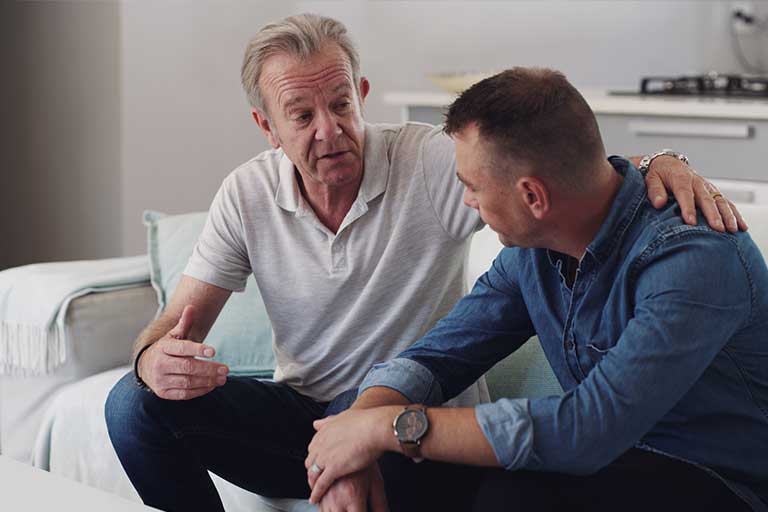
A conversation could save a life
What to do
You are not alone if you feel unsure what is the right thing to do and say in a situation like this.
This website will help and guide you.
Encourage the person you are concerned about to talk about how they are feeling. Surprisingly, asking them a direct question about whether they have thought about suicide can also make all the difference. Some people think that asking someone whether they are having suicidal thoughts will put the idea of taking their own life in their head.
This is a MYTH. Evidence shows that asking the direct question actually opens the door and gives them permission to speak about it.
Fact
In the UK, suicide is the leading cause of death for men aged 20 to 35.
Fact
Fact – 1 in 6 female deaths in 20 to 34 year olds is by suicide.
There are three important steps to remember:

See
Not everyone who is thinking about suicide will tell someone but there may be warning signs. We list some of the warning signs below.

Say
Reach Out and start a conversation. Not many people will be sure what to say so we have partnered with the Zero Suicide Alliance who have 20 minute training which will help you gain the confidence to start that conversation.

Signpost
There are lots of services out there that can help people who are feeling suicidal. You can either contact the service yourself or encourage them to connect. All the details are below. If the person is in immediate danger call 999 or take them to A&E.
You must not forget to look after yourself. This is a very stressful situation. You may find it helpful to discuss your feelings with another friend, or a confidential service.
If you find yourself alone in trying to support a person in distress, it’s very important that you don’t put yourself in unnecessary danger, ask for help or call 999 if you feel you need to.
SEE – the warning signs
When someone is contemplating suicide, their words and actions can give clues or warning signs.
Not everyone is the same and each situation will be individual. The following warning signs are a guide only and hopefully give you the permission to reach out and start a conversation.
This is NOT an exhaustive list. If your concern is not listed below trust your instinct.
Things happening in their life
- Relationship break down
- Financial problems
- Job problems
- Past suicide attempts
- History or current severe mental illness
- History or current alcohol or drug abuse
- Sleeping too much or too little
- Domestic violence
- Chronic pain and illness
- Recently open about sexuality or concerns regarding gender.
How they could feel and behave
- Becoming withdrawn
- Lack of interest in activities once enjoyed
- Self-harm
- Irritability / moody / confused
- Not looking after self in the same way
- Anger / aggression
- Giving away possessions or writing a will
- Searching about suicide on the internet or social media
- Gathering materials (for example pills / weapons)
- Talk of sorting out debts with some urgency
- Appears calm and at peace when this is not the norm.
Things they could say – direct or via social media
- Concerned about the future
- They are a burden
- I hate myself
- I want to give up
- No one would notice if I wasn’t there
- Can’t cope with life anymore, just want things to be the way they were.

Suicide can affect anyone, but we have found that some people may be more at risk: middle aged men, university students, people with physical health problems and people who may be socially isolated including those who are single, widowed, divorced or living alone. People who are experiencing lots of difficult factors at the same time such as recent breakdown of relationship, loss of housing or income, money worries and debt are at greater risk and use of drugs or alcohol as a way of coping can increase risk further. These factors are commonly associated with risk of suicide but they can be hidden and people may have thoughts of suicide for other reasons – so it’s important to trust your instinct and if you’re worried, start a conversation that could save a life.
SAY – Reach out and start a conversation
Suicide is preventable. We can all make a difference and reach out to someone we are concerned about. There is a need to talk about suicide openly and remove the myths and stigma.
We need to encourage people to talk about their feelings and acknowledge that they may be struggling. Talking about suicide does not come easy and you are not alone if you feel unsure what to do and say.

Zero Suicide Alliance
In 20 minutes the Zero Suicide Alliance training will help to build the skills and confidence to know what to say and do. It will help you prepare and know what to expect. If you don’t have 20 minutes there is a shorter taster session.
A university student edition of the training is also available to help if you are concerned about a student, focusing on information and scenarios related to experiences at university and what to be aware of.
The ZSA also provide a range of Suicide Awareness and Prevention training that’s tailored towards specific situations such as taking to a stranger, having the conversation as a health professional, a taxi drive or prison officer. They also provide courses focussed on people for example who are neurodiverse, members of the LGBTQ+ community, or Veterans.
Fact
The majority of people who feel suicidal do not actually want to die; they do not want to live the life they have. The distinction may seem small but is very important. It’s why talking through other options at the right time is so vital.
SIGNPOST – help is available 24/7
There are services in Liverpool available to provide support to people in crisis.
Help is available
For children and young people up to the age of 18:
Liverpool CAMHS
If you are worried about a child or young person, visit the Liverpool Child Adolescent Mental Health Services (CAMHS) website.
Papyrus
A national charity set up over twenty years ago to prevent the deaths of young people under 35 by suicide. They offer support to individuals, parents, carers and professionals on how to keep young people safe in periods of suicidal crisis.
- Freephone 0800 068 4141.
- Open 9am-10pm weekdays and 2pm-4pm weekends and bank holidays.
For adults over the age of 18:

Life Rooms
Advice and help with mental health, debt, housing and physical wellbeing. They also have online learning covering topics such as physical activity, depression and arts.
Call Life Rooms on 0151 478 6558.

Talking therapies
A free NHS service for people over age 16 offering psychological therapies to adults in Liverpool who are feeling depressed or anxious.

Samaritans
Talking to someone can help you get your thoughts in order. You might feel lonely, distressed or worried about your life situation. Call Samaritans on 116 123.
Mersey Care
The Merseycare website gives information about creating a safety plan, self-help resources and apps that could help someone in a crisis.
Papyrus
A national charity set up over twenty years ago to prevent the deaths of young people under 35 by suicide. They offer support to individuals, parents, carers and professionals on how to keep young people safe in periods of suicidal crisis.
- Freephone 0800 068 4141.
- Open 9am-10pm weekdays and 2pm-4pm weekends and bank holidays.

The Liverpool Light
The Liverpool Light is an out-of-hours mental health crisis service for individuals aged 18+, open from 6pm-1am, 7 days a week.

Stay Alive App
To help anyone who is having suicidal thoughts, or anyone who is concerned for someone that they care about. It signposts to local support and features a safety plan for those in crisis and a lifebox which can be filled with memories and images of loved ones.

James' Place
Help is available for every man facing a suicidal crisis with support to help them find hope for the future. James’ Place works with health partners to deliver a service to men whose needs have not been met by traditional services.

Hub of Hope
A UK mental health support database provided by national mental health charity, Chasing the Stigma. It brings local, national, peer, community, charity, private and NHS mental health support and services together in one place for the first time.